
04.21.2026


Federal Firearms Licensees (FFLs) operate in one of the most scrutinized retail environments in America. Between ATF (Bureau of Alcohol, Tobacco, Firearms and Explosives) compliance requirements, rising theft trends, and the public safety implications of stolen firearms, gun store owners face security challenges that go far beyond typical retail concerns. A comprehensive gun security cabinet strategy, combined with hardened physical barriers, protects your employees, your business, and your community.
The Escalating Threat of Gun Store Theft
Gun stores have become high-priority targets for organized criminal networks and opportunistic thieves alike. Approximately 30,000 firearms are stolen annually from dealers, homes, and vehicles across the United States, with FFL thefts representing a significant portion of crime guns recovered by law enforcement.
Research indicates that roughly 1 in 10 crime guns traced by ATF can be linked to theft incidents, including burglaries at gun stores and pawn shops. The average gun store burglary unfolds in under 90 seconds. A 2024 report analyzing gun store security found that many retailers lack robust physical security measures that would effectively prevent or delay firearm theft.
For FFLs, a single theft event can trigger devastating consequences: immediate financial loss from stolen inventory, property damage requiring expensive repairs, increased insurance premiums, regulatory investigations, potential license revocation, and the knowledge that stolen firearms may fuel violence in your community.
Why Standard Gun Cabinets and Display Cases Aren't Enough
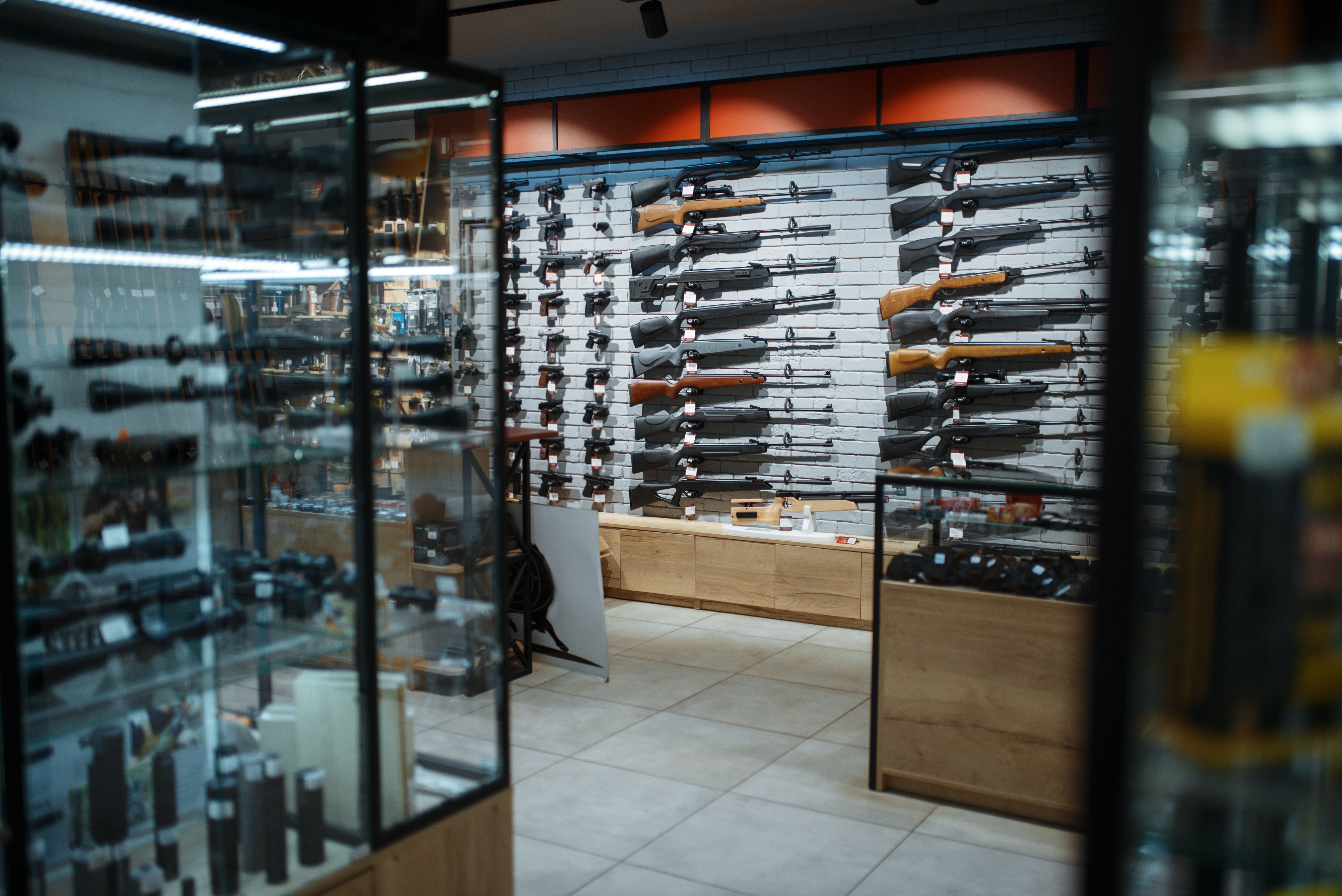
Most gun stores implement baseline security measures, including locking display cases, wall-mounted racks with cable locks, safes for after-hours storage, alarm systems, and surveillance cameras. While these elements play important roles in a comprehensive security plan, they share a critical vulnerability: they're designed for convenience during business hours, not for defeating determined criminals after closing.
Glass display cases shatter easily under sledgehammer or crowbar attacks, allowing thieves to sweep handguns into bags in seconds. Lightweight wall racks can be pried open, cut through, or even removed entirely if not properly anchored behind additional barriers.
Inadequate perimeter security allows criminals to breach the building and reach interior gun storage before law enforcement can respond. Insufficient safe capacity forces retailers to leave firearms in display areas overnight, creating unacceptable exposure.
The ATF's Loss Prevention Guide for Firearms Retailers emphasizes that effective security requires multiple layers working together: alarm systems, video surveillance, secure firearm storage, and robust physical barriers that prevent or significantly delay unauthorized entry.
ATF Compliance and Best Practices
The Bureau of Alcohol, Tobacco, Firearms and Explosives provides clear guidance for FFLs regarding physical security and loss prevention, including:
- Regular security evaluations of your premises, including structural integrity, door and window locks, roof security, and adjoining walls
- Alarm systems with monitoring, cellular backup, interior motion detection, glass breakage sensors, and audible local alarms
- Video surveillance with motion detection and clear footage retention
- Secure firearm storage when the business is closed. All firearms must be secured in safes, vaults, or secure rooms
- Annual inventory with serial number verification to identify losses promptly
- Immediate reporting of theft or loss to local law enforcement and ATF within 48 hours using ATF Form 3310.11
FFLs should display signage indicating, "All handguns secured after hours," or "Premises under video surveillance," to deter potential criminals. More importantly, these signs should reflect reality. Your security measures must actually deliver the protection they advertise.
Layered Physical Security: The Modern FFL Standard
Leading FFLs are adopting a defense-in-depth approach that protects the perimeter, the sales floor, and firearm storage areas as an integrated system. This layered strategy recognizes that relying on any single security measure creates unacceptable risk.
Exterior Hardening: Security Shutters and Glazing
Your storefront represents your most significant vulnerability. Large display windows and glass doors provide visibility during business hours but become entry points for smash-and-grab attacks after closing.
Rolling security shutters provide formidable protection. Heavy-duty aluminum slats with reinforced guides resist prying, cutting, and impact attacks. Perforated designs maintain visibility while blocking access, and solid configurations offer maximum protection for high-risk entry points.
When professionally installed security shutters protect your storefront, criminals face an impenetrable barrier that defeats common attack methods. Most thieves move on to softer targets rather than spend precious minutes attempting to breach quality shutters, making them both a physical barrier and psychological deterrent.
In addition, security glazing from Riot Glass provides 24/7 forced-entry resistance. Glass-clad polycarbonate (GCP) withstands repeated impacts from hammers, bats, crowbars, and thrown objects. Retrofit installation over existing windows eliminates expensive full replacements. Ballistic-rated options stop handgun rounds, which can be critical for firearms dealers.
Interior Protection: Secure Gun Storage and Cabinets
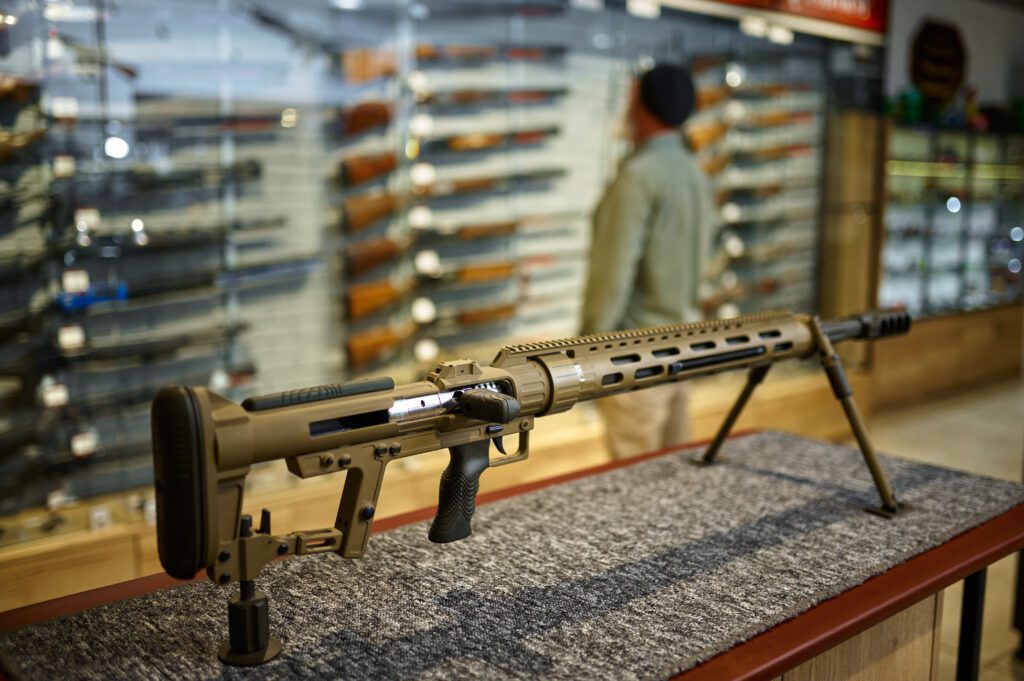
Even with hardened perimeters, interior gun security cabinets and storage systems form a critical layer of defense. High-security merchandise cases for burglary resistance and sufficient capacity protect your entire handgun inventory.
Secure storage rooms can compartmentalize firearm inventory and restrict access to authorized personnel only. Cable locks and trigger guards as additional layers when firearms must remain on display. Counter security shutters that seal off transaction areas and provide fast, secure separation between public and restricted zones.
ATF regulations require FFLs to store firearms securely to prevent unauthorized access, and as of 2022, secure storage devices must be compatible with the firearms you sell. This means your gun security cabinet strategy must evolve with your inventory.
Exit Point Reinforcement: High-Security Doors
Standard commercial doors fail quickly under determined attack. High-security exit doors engineered specifically for firearms retailers feature:
Heavy-gauge steel construction resists battering, prying, and cutting attacks. Reinforced door frames prevent frame spreading, a common defeat method for conventional doors. Commercial-grade locking mechanisms contain anti-pry hardware and deadbolts. Optional ballistic ratings creates maximum protection in high-risk locations.
High-security exit doors integrate seamlessly with access control systems and video surveillance to create comprehensive exit protection.
Implementing Your Gun Security Cabinet Strategy
Developing an effective security plan starts with a comprehensive risk assessment and clear understanding of your vulnerabilities:
Step 1: Audit Your Current Security Posture
Walk your perimeter and identify potential entry points: doors, windows, roof access, adjoining walls. Evaluate your gun security cabinets, display cases, safes, and storage capacity. Test your alarm system, including cellular backup and all sensors. Review surveillance camera footage to ensure clear recording quality. Document what firearms are visible from outside and which remain in displays overnight.
Step 2: Prioritize Physical Barriers
Install security shutters or grilles on all storefront glass and doors. Upgrade to high-security exit doors at primary and secondary entry points. Consider security glazing for 24/7 forced-entry resistance. Eliminate roof vulnerabilities and secure adjoining walls.
Step 3: Upgrade Interior Gun Storage
Invest in commercial-grade gun safes with sufficient capacity for all handguns and high-value long guns. Implement anti-theft display systems for firearms that must remain accessible. Install counter security shutters to rapidly secure transaction areas. Create secure storage rooms with restricted access for bulk inventory.
Taking Action: Secure Your Firearms Business Today
Gun store security is a regulatory requirement, an insurance necessity, a business imperative, and a community responsibility.
QMi has protected thousands of businesses, including firearms retailers, with engineered security solutions designed specifically for high-risk environments. With 40 years of experience, QMi has delivered security solutions for retail stores, government facilities, correctional institutions, and critical infrastructure, environments where security failures have serious consequences.
QMi Security Innovations stands ready to help you protect your FFL, your inventory, and your community. Contact us today to schedule a confidential security assessment and learn how our engineered solutions can transform your gun store's security posture from vulnerable to virtually impregnable.
