
08.11.2026


Machine shops are home to expensive equipment, raw materials, parts, and fabricated components, putting them at high risk for forced entry and theft.
CNC machines, milling equipment, and specialized tooling represent a significant investment that needs to be protected, and the parts, materials, and finished components moving through the shop floor carry significant value of their own. For anyone looking to steal, that combination makes machine shops an enticing target, especially after hours when the building sits empty and vulnerable.
Protecting a machine shop against forced entry and theft requires more than locking the front door on the way out. It requires a layered machine shop security plan built around how the facility actually operates, from the loading area where materials come in and finished products go out to the restricted zones where the most valuable materials, parts, and equipment sit.
Why Machine Shop Security Matters
While most commercial facilities face some level of threat related to forced entry and theft, the potential consequences for machine shops are different from typical commercial buildings.
CNC machines and precision tools are expensive to replace and often difficult to source quickly, so even a single theft can stall production for days or even weeks. Metal stock, finished parts, and proprietary tooling are also attractive targets, especially for professional thieves with buyers lined up.
After-hours forced entry and burglary are how theft-related losses often happen in machine shops. Older rear doors, ground-floor windows, and loading areas are frequently the weakest points in a shop's security, and intruders know it. A door that has not been upgraded in years, or a window that was never meant to withstand an attempted break-in, can give a thief everything they need to get inside undetected.
In order to prevent unauthorized access and safeguard proprietary tooling, client-specific projects, and high-value machinery, these facilities need physical security measures in place to stop would-be intruders in their tracks.
Before adding new security measures, it’s worth having a professional assess the property. A threat assessment can identify which entry points, storage areas, and restricted zones are the most vulnerable, so any investment in security goes toward the areas that actually need it.
How To Improve Machine Shop Security
Fortunately, it’s possible to secure machine shops with high-security shutters, commercial security doors, and protective solutions designed to safeguard CNC machines, precision tools, equipment, inventory, and restricted work areas from theft and unauthorized access.
Two of the most effective physical measures for machine shops are:
- Roll-down security shutters
- High-security commercial doors
1. Roll-down security shutters
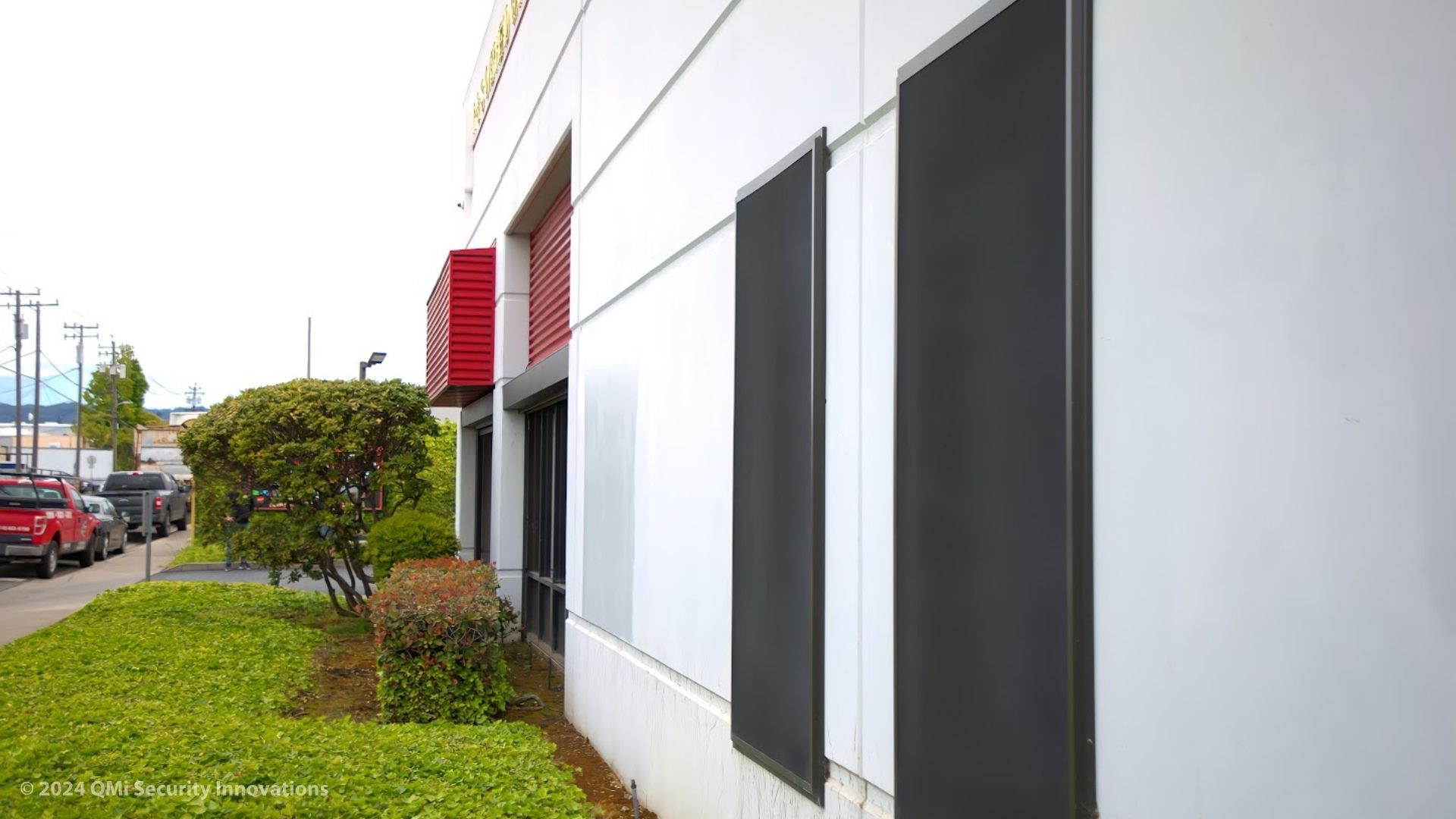
Roll-down shutters cover exposed windows and doorways when the shop is closed, locking into place to seal off vulnerable openings. Ground-floor windows and glass entry doors are easy targets for a break-in since they can be shattered quickly, giving an intruder direct access to the shop floor. A roll-down shutter removes that risk by covering the glass entirely, leaving no exposed pane to break through.
Because the shutters lock securely in place, they also resist prying and forced lifting, which makes them effective even against more determined attempts at entry. For machine shops with expensive equipment sitting close to windows or storefronts, shutters add a dependable layer of protection overnight and on weekends when no one is on site.
Not only that, but roll-down shutters can be used inside a facility to create additional layers of protection over the most sensitive areas.
QMi's AL8 Commercial rolling shutters are built for this kind of application, offering solid and perforated slat options depending on whether a shop wants full coverage or some visibility into the space.
2. High-security commercial doors
Rear exits, loading dock doors, and other secondary entrances are often the least secure points in a machine shop, especially if they feature standard commercial exit doors rather than high-security versions.
Standard commercial exit doors are vulnerable to cutting, drilling, prying, and ramming, especially if they were installed years ago without forced-entry resistance in mind. High-security commercial exit doors address this with reinforced steel construction, including heavy-duty hinges, hardened locking hardware, and specialized construction designed to resist these tactics. Upgrading these secondary entry points closes off one of the most common ways intruders get into a facility undetected.
QMi's HD1 high-security exit door is designed specifically for openings like this, giving machine shops a durable option for securing loading docks and emergency exits that still need to meet code requirements.
Restricting Access to Sensitive Areas
Beyond the building envelope, machine shops need to control who can reach specific areas inside the facility. Not every employee or visitor needs access to every part of the shop, and limiting that access reduces both theft risk and the chance of accidental damage to sensitive equipment.
Ways to manage access inside the facility include:
- Keycard or credential-based access control on doors leading to restricted areas
- Separate zones for high-value CNC equipment, proprietary tooling, or client-specific projects
- Logged entry records so shop management knows who accessed a restricted area and when
- Visitor and vendor check-in procedures for anyone entering the building who is not staff
Other Machine Shop Security Tips
Physical barriers and access control work best alongside a broader commercial security strategy. Other measures worth considering implementing or updating include:
- 24/7 monitored security cameras covering entry points, loading areas, and high-value equipment
- Monitored alarm systems that notify security personnel or law enforcement immediately during a forced entry attempt
- Inventory tracking for tools, materials, and finished parts to quickly flag anything missing
- On-site security personnel or after-hours patrols for larger shops or those in higher-risk locations
- Routine maintenance checks on doors, shutters, and locks to catch weaknesses before they become a problem
- Strong exterior lighting around entrances, loading docks, and parking areas to discourage after-dark break-in attempts
Key Takeaways
Machine shops carry a unique risk profile, from the high cost of CNC equipment and precision tooling to the sensitivity of restricted work areas and proprietary projects.
A multi-layered machine shop security plan, built around physical measures like roll-down security shutters and high-security steel security doors, along with access control and monitoring, gives shop owners a real way to keep intruders out rather than simply react after a break-in has already happened.
Every machine shop has its own layout and risk profile, so the right security plan should be built around the facility itself. Contact QMi Security Innovations for a consultation to find the right combination of security solutions for your property.
